 Steady
Hunger while fasting
How to deal with hunger while fasting.
Hunger during a fast does not keep climbing until you give in. It comes in waves. Each wave builds, peaks and fades, and most of them fade in about 20 minutes. Once you know that, a wave is something to wait out, not a sign the fast is failing.
Hunger comes in waves
Most people expect hunger to get worse every hour they go without food. That is not how it feels in practice. Part of what drives hunger is a hormone that rises around the times you usually eat. Studies that track it find it tends to fall again even when no food arrives. Your body is running on a schedule, and it can learn a new one.
What hunger does across a 16 hour fast
The pattern most people describe on a 16:8 fast that skips breakfast. Not measured data.
How hungry you feel
How to get through a wave
- Drink a full glass of water. Some of what feels like hunger is thirst. Water also gives your stomach something, and it takes a few minutes, which is a few minutes of the wave gone.
- Have a coffee or tea, if you normally would. Black coffee and plain tea are fine during a fast. For many people they take the edge off. See what you can drink while fasting.
- Change what you are doing. Hunger is loudest when you are bored and near food. Walk around the block, move to another room, or start a task that uses your hands.
- Breathe slowly for three minutes. Slow breathing will not fill your stomach. What it does is fill the time in a calm way, and the wave keeps fading while you do it. Breathe out for longer than you breathe in, and do not hold your breath while fasting.
- Set a 20 minute timer. Do not decide "never." Decide "not yet." If you still want to eat when the timer ends, eat, and treat it as useful information, not a failure.
How to curb hunger before it starts
The easiest wave to deal with is a smaller one. A few things you do outside the fast change how loud the hunger is inside it.
Make the last meal a real one. A last meal with protein and fiber keeps you full longer than a light snack or a bowl of something sweet. Eggs, fish, chicken, beans, yogurt and vegetables all help.
Sleep. Tired people feel hungrier, and they have less patience for it. A bad night is the most common reason an easy fast turns hard.
Keep coffee on its normal schedule. Changing your meals is one change. Changing your caffeine at the same time is two, and the second one can bring a headache that makes hunger feel worse.
Do not fast through your hardest hour at first. If late afternoon is when you always snack, pick a window that ends before it. You can stretch the window later, once the hunger has settled.
The first week is the hungriest
New fasters get the loudest hunger. Your body still expects food at the old times. Most people say days two to four are the worst, and that hunger has calmed down by the end of week two. It is not a promise. It is common enough that quitting on day three tells you very little about whether fasting suits you.
How strong the hunger waves feel, first two weeks
What people commonly report on a steady 16:8 schedule. Not measured data.
When hunger means eat
Ordinary hunger is uncomfortable. It is not dangerous. But some feelings look like hunger and are not something to push through.
Ending a fast early is not failing. A fast you end safely is a fast you can try again tomorrow. More on the full list is in intermittent fasting side effects.
Where Steady fits
Steady is a very simple fasting app. You do not log food, water or weight, and there are no streaks to keep. It exists for one moment: the hungry, tired hour when you are about to quit.
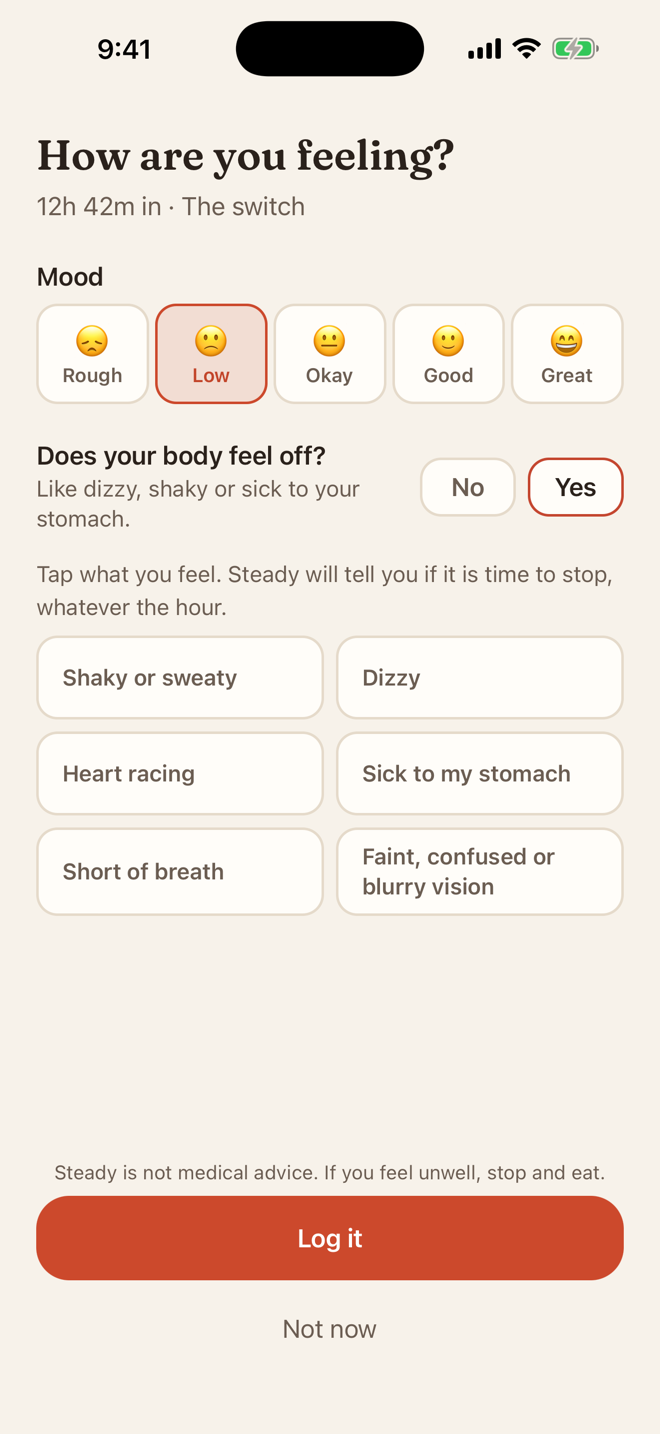
Just before that hour, it asks one two-tap question: how are you doing? If the answer is low, it offers something to do right then. Three minutes of paced breathing, a small puzzle, or a glass of water and a short wait. Then it checks back in later. If you tick shaky or dizzy, it does not offer any of that. It tells you to stop and eat.
Questions people ask
How do you deal with hunger when fasting?
Treat it as a wave, not a rising line. Drink a glass of water, change what you are doing, and give it 20 minutes. Most hunger during a fast peaks around the times you usually eat and then fades on its own. If it is still strong after 20 minutes, or you feel shaky or dizzy, eat.
How do you curb hunger when fasting?
Water, black coffee or plain tea, a short walk, and keeping busy all help. So does eating enough protein and fiber in your last meal before the fast. Going to bed earlier helps too, because tired people feel hungrier. The biggest help is time: the first week is the hungriest, and hunger usually eases after that.
Does hunger go away when fasting?
Each wave usually does, often within 20 minutes or so. Over days, most people find hunger gets quieter as their body gets used to the new meal times. The first three or four days tend to be the hardest. If hunger is still strong every day after three or four weeks, a shorter fasting window is usually the better fix.
Why am I so hungry while fasting?
Mostly habit. Hunger is partly driven by a hormone that rises around the times you usually eat. If you have eaten breakfast at 8 for years, your body expects food at 8. Poor sleep, stress, and a small or low protein last meal all make it louder.
Is it OK to go to bed hungry when intermittent fasting?
Mild hunger at bedtime is common in the first week and usually fine. If it keeps you awake night after night, move your last meal a little later or pick a shorter window. Bad sleep makes the next day's fast much harder, so it is not a good trade.
When does hunger mean I should eat?
When it comes with feeling shaky, sweaty, dizzy while sitting, confused, or a racing heart. Those are not hunger to push through. Eat now, whatever the timer says. Also eat if the hunger has not eased at all after 20 minutes and you simply want to. Ending a fast early is not failing.
Get through the hard hour.
Steady is a very simple fasting app for iPhone. There is nothing to track: no food, water or weight logs, no streaks, no account. Just a timer for 12 to 20 hour windows, and a tool that helps you through the hour you would usually quit. Nothing leaves your phone.
Free while it is in beta. Tell us what breaks, and we will let you know when Steady reaches the App Store.